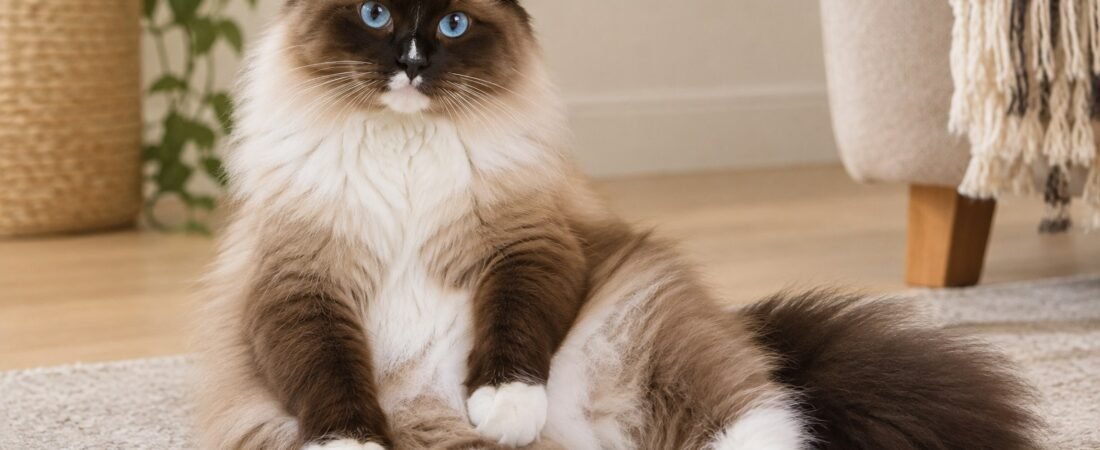
A Seal Mitted Ragdoll Cat has deep seal-brown points, a lighter body, white front mittens, white hind boots, a white chin, and a white stripe along the belly. “Seal” describes the point colour, while “mitted” describes the white markings. These terms describe colour and pattern, not a separate breed or a guaranteed personality.
Reviewed and updated: October 21, 2026.
What is a Seal Mitted Ragdoll?
The Seal Mitted Ragdoll is a colour and pattern variety of the Ragdoll, not a separate breed. It combines the seal point colour, which appears as deep brown on the face, ears, legs and tail, with a defined pattern of white markings. The most reliable way to recognise it is to look at the front paws, hind legs, chin and underside together.
The front white areas look like small mittens, while the hind-leg white areas resemble boots. A white chin should continue into a white stripe across the chest and along the belly. A small white blaze may be present on the face, but the large inverted white V is more closely associated with the bicolor pattern. Breed standards describe ideal show markings; pet cats may have some variation.
Coloration and Markings
In this pattern, seal refers to a deep brown colour on the points, especially the mask, ears, legs and tail. The body is usually lighter, often warm cream or fawn, with contrast becoming more noticeable as the kitten matures. The pattern includes white mittens, hind boots, chin and belly stripe, as described by the TICA Ragdoll Breed Profile.
Some seal mitted Ragdolls have a white facial blaze, which may appear as a narrow line or another small central marking. A prominent inverted white V is more typically associated with the bicolor pattern, so it should not be treated as a defining feature of the mitted pattern. The key mitted markings are the white front mittens, hind boots, chin and belly stripe.
The mitted pattern changes coat markings, not breed identity or personality. This pattern remains part of the Ragdoll breed, and the cat needs regular grooming, play, companionship and veterinary care like other Ragdolls.
Ragdoll Cat Breed and Characteristics
The Ragdoll breed was developed in California in the 1960s. It is known for a semi-long coat, blue eyes, pointed colouring and a large, muscular build. Breed descriptions often characterise Ragdolls as sociable and relaxed, although individual temperament varies. For registry information, refer to the TICA Ragdoll Breed Profile.
Many Ragdolls enjoy being near their people and taking part in daily household life. They also benefit from interactive play, climbing options, scratching surfaces and quiet places to rest. A calm breed reputation does not mean every individual will like being carried or will be equally comfortable with children, visitors or other pets.
Physical Characteristics
| Characteristic | Ragdoll Breed Context |
|---|---|
| Coat | Semi-long, soft coat that needs regular combing. Seal is one of the recognised point colours. |
| Pattern | Ragdolls are pointed. Mitted cats have white mittens, hind boots, a white chin and a belly stripe. |
| Eyes | Blue eyes are a defining feature of the pointed Ragdoll breed. |
| Body | Typically large and long-bodied, but individual adult size varies with sex, genetics and body condition. |
| Facial marking | A large inverted white V is associated with the bicolor pattern, not a required feature of the mitted pattern. |
How to Identify a Seal Mitted Ragdoll Cat
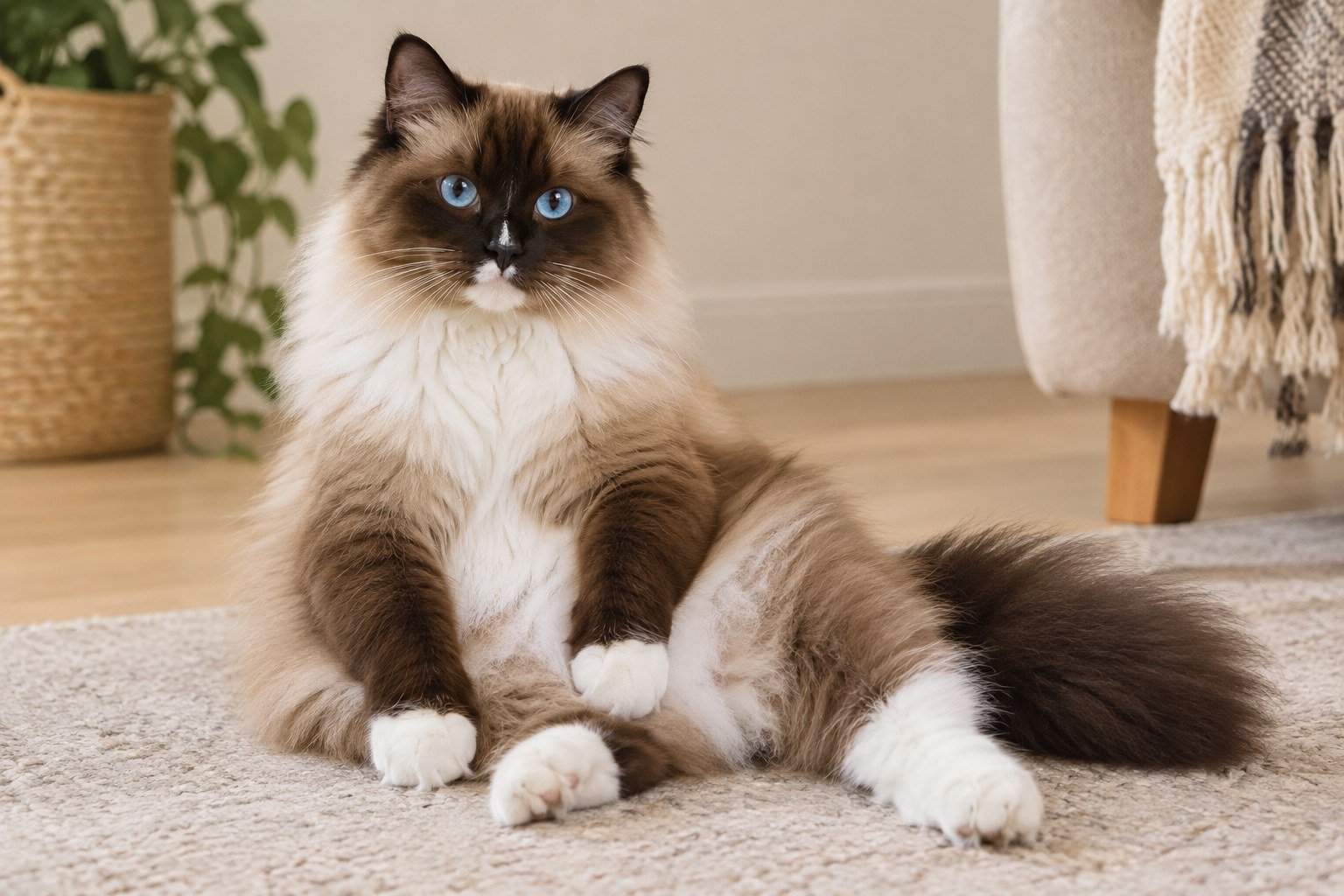
The pattern combines seal colorpoint colouring with white markings in specific places. “Seal” describes the deep brown points, while “mitted” refers to the white front paws and white hind feet that extend up the legs like boots. Check the chin and belly stripe too, rather than identifying the pattern from the shade alone.
Seal Mitted Markings Checklist
- Seal-brown points: darker coloring appears on the face mask, ears, legs and tail, against a lighter body coat.
- White front mittens: both front paws have white markings, ideally matched and reaching toward the wrists.
- White hind boots: white extends up the back feet and around the hocks, without reaching too high up the thighs.
- White chin and belly stripe: the chin is white, continuing into a white stripe along the underside.
- Blue eyes: blue eyes are characteristic of the pointed Ragdoll breed.
- Possible facial blaze: a white blaze may appear on the face, but it is not the same defining inverted V typically associated with the bicolor pattern.
Markings can vary in symmetry and extent, and pets may not match every show-standard detail. The Cat Fanciers’ Association Ragdoll Breed Standard describes white mittens on both front feet, white on the hind legs around the hocks, a white chin and a white belly stripe. The TICA Ragdoll Breed Profile provides a helpful overview of the three main patterns. A photo alone cannot confirm pedigree or registration.
Seal Mitted vs Seal Point vs Seal Bicolor Ragdoll
These terms describe different combinations of point colour and white pattern. A seal point colourpoint Ragdoll has seal-brown points without the mitted white markings. The mitted pattern includes white mittens, hind boots, a white chin and a belly stripe. A seal bicolor usually has more extensive white, including a white inverted V on the face and white across much of the underside and legs.
| Pattern | Typical white markings | What to look for |
|---|---|---|
| Seal Point / Colorpoint | No white markings in the standard colorpoint pattern | Seal-brown points and a lighter body |
| Seal Mitted | White front mittens, hind boots, chin and belly stripe | White paws plus a continuous white underside marking |
| Seal Bicolor | More extensive white on face, chest, underside and legs | Typically a white inverted V on the face |
For a closer comparison, read our Seal Point Ragdoll Cat Guide and Seal Bicolor Ragdoll Guide. For a broader overview, see our Ragdoll Cat Colors and Patterns Guide.
Seal Point Colour Development in Ragdoll Kittens
Ragdoll kittens are born pale, and their point colour develops as they grow. Seal-brown colouring often deepens with age, so a young kitten may not show the same contrast as an adult. The Cat Fanciers’ Association notes that full colour develops over time, with allowance for faint kitten markings. The final shade varies, so avoid judging an adult coat from a single early photograph.
Photos can mislead because warm indoor lighting may make seal points look more reddish or darker, while a top-down angle can hide the white underside stripe. When comparing kittens, ask for recent, clear views of the face, both front paws, hind legs and belly. Look at the full pattern rather than deciding from the mask or eye colour alone, and avoid edited photos that alter the coat shade.
Ask the breeder for clear photos of the kitten’s face, front paws, hind legs and underside, as well as photos of the parents where available. A responsible breeder should explain the kitten’s registration, health history and expected pattern without promising an exact adult appearance.
Personality and Home Fit
Seal mitted describes coat colour and markings, not a separate personality type. Ragdolls are commonly described by breed organisations as affectionate, sociable and generally relaxed, but individual cats vary. A cat with these markings may enjoy company and play, but its pattern cannot tell you whether it will enjoy being carried or cuddle on demand.
Plan daily interactive play, safe climbing and scratching options, quiet resting places, and gradual introductions to children or other pets. Because Ragdolls can be trusting and people-oriented, supervise young children and provide safe indoor spaces rather than assuming a calm temperament means a cat needs little attention.
Grooming, Feeding and Everyday Care
Brushing and Coat Checks
Comb the semi-long coat at least weekly and check behind the ears, under the front legs, around the hindquarters and along the belly for tangles. During seasonal shedding, more frequent combing may help. Introduce grooming gradually and reward calm handling. Bathe only when needed, using cat-safe products and avoiding the eyes and ear canals.
Nutrition, Play and Weight
Choose a complete and balanced cat food suited to your cat’s life stage, measure portions, keep fresh water available and ask your veterinarian about an appropriate body condition. Daily play with wand toys, puzzle feeders and climbing structures supports activity. Avoid using a breed’s typical size as the only guide to whether an individual cat is at a healthy weight.
Health Checks and Responsible Breeder Questions
Coat pattern does not tell you whether a cat is healthy. Before choosing a kitten, ask for veterinary records, vaccination and parasite-control history, the parents’ health information, and any relevant screening for inherited conditions. Hypertrophic cardiomyopathy (HCM) is a known concern in Ragdolls, so ask what genetic testing and veterinary screening have been performed and what the results mean. A DNA test does not replace ongoing veterinary care.
- Can I review the kitten’s veterinary and vaccination records?
- What health screening has been completed for the parents, including relevant HCM testing?
- Can you explain the kitten’s registration and provide written purchase or adoption paperwork?
- At what age will the kitten leave, and how has it been socialized?
- What support do you provide if a health concern appears after the kitten comes home?
For background on feline HCM, read Cornell Feline Health Center’s Hypertrophic Cardiomyopathy in Cats. This article is general educational information, not a diagnosis; discuss individual health concerns with a veterinarian.
What Does HCM Screening Tell You?
Ask the breeder which test was used, which parent was tested, when it was performed, and whether the results can be independently verified. Genetic testing can identify specific known variants, but it cannot rule out every possible case of HCM. A veterinarian can explain whether further assessment, including cardiac imaging, is appropriate for an individual cat.
Genetic Results Are Not a Lifetime Guarantee
A clear result for a particular variant does not guarantee that a cat will never develop heart disease. Keep veterinary records, share the parent history with your veterinarian, and seek professional advice if signs such as breathing difficulty, fainting or sudden weakness occur.
How Much Does This Colour Pattern Cost?
There is no universal price for a Seal Mitted Ragdoll Cat. Cost depends on your country and region, the breeder, pedigree and registration records, the parents’ health screening, the kitten’s age, and what veterinary care has already been provided. A seller calling a kitten “rare” does not prove that the price is fair or that the kitten is healthy. Compare written records and welfare standards, and budget separately for food, litter, grooming tools, routine veterinary care, parasite prevention, vaccinations as advised, and unexpected treatment. Adoption through a Ragdoll rescue may also be worth considering.
FAQs (Because People Keep Asking)
Are seal mitted Ragdolls rare?
Rarity depends on location, breeder availability and the exact pattern being sought. There is no reliable universal figure that proves seal mitted Ragdolls are rare, so ask reputable breeders about current or planned litters rather than relying on scarcity claims.
Do Pointed Ragdolls Have Blue Eyes?
Blue eyes are a characteristic of the pointed Ragdoll breed. If a cat is being sold as a pedigreed Ragdoll and has a different eye color, ask a qualified breeder or registry to clarify its breed and registration details.
What is the difference between mitted and bicolor Ragdolls?
Mitted Ragdolls have white front mittens, white hind boots, a white chin and a belly stripe. Bicolor Ragdolls typically have more extensive white markings, including an inverted white V on the face.
Do Ragdoll Kittens Get Darker as They Grow?
Yes, seal point coloring generally becomes more visible as a Ragdoll matures, and many Ragdolls darken with age. The final shade varies between cats.
How Often Should I Brush a Ragdoll’s Coat?
Start with at least weekly combing and increase the frequency when the coat tangles or shedding increases. Adjust the routine to your individual cat’s coat and comfort.
What should I ask a seal mitted Ragdoll breeder?
Ask about veterinary records, vaccinations, parent health screening including HCM, registration documents, socialization, return policies and ongoing support. Be cautious of sellers who pressure you to pay quickly or refuse reasonable documentation.
How can I tell if my kitten is a mitted Ragdoll?
Look for white front mittens, white hind boots that reach around the hocks, a white chin, and a stripe continuing down the chest and belly. Markings can vary, and appearance alone cannot verify pedigree. Ask the breeder for registration and parentage documents if pedigree matters to you.
What Does a Seal Mitted Ragdoll Cat Look Like?
Look for seal-brown points on the face, ears, legs and tail, plus a lighter body, white front mittens, hind boots, white chin and belly stripe. Blue eyes are characteristic of the pointed Ragdoll breed, and the seal points often become more pronounced as the kitten matures.
Can a Seal Mitted Ragdoll Cat Have a White Facial Blaze?
Yes. A small white blaze on the nose or between the eyes can appear in the mitted pattern, but it is not required. A large inverted white V across the face is more typical of a bicolor Ragdoll. For show-standard wording, consult the CFA Ragdoll Breed Standard.
Should I Choose a Seal Mitted Ragdoll Cat Based on Colour Alone?
No. Choose based on the individual cat’s health, temperament, breeder transparency and care needs, not colour alone. The mitted pattern describes its white markings, not its personality or health. Review veterinary records, meet the cat if possible, and consider whether you can provide grooming, play, companionship and routine care.
Final Takeaway
A Seal Mitted Ragdoll Cat is recognised by the combination of seal-brown points, white front mittens, white hind boots, a white chin and a white belly stripe. A small facial blaze can occur, but the large inverted V is more typical of the bicolor pattern. Use registry standards to understand the markings, and check health records and temperament before choosing a kitten.
Editorial Note
This guide explains a Ragdoll coat colour and marking pattern, not a separate breed. Breed-standard descriptions help with pattern identification but cannot confirm a cat’s pedigree from a photo alone. Personality and health vary between individuals. This article is general educational information and does not replace advice from a qualified veterinarian.
Trusted Sources
The marking and care information in this guide was checked against recognised breed standards and published veterinary resources:
- TICA Ragdoll Breed Profile for recognised colours, patterns, general characteristics and care information.
- Cat Fanciers’ Association Ragdoll Breed Standard for mitted markings, white chin and belly stripe, hind-leg markings and the distinction from bicolor.
- Cornell Feline Health Center: Hypertrophic Cardiomyopathy for veterinary information about a known inherited health concern in Ragdolls.
How This Guide Is Researched and Kept Current
We compare pattern descriptions from recognised cat registries and breed standards, then use veterinary resources for health-related claims. We distinguish ideal show markings from normal variation in pet cats and avoid claiming that colour predicts personality or health. This article was reviewed on October 21, 2026. Breed standards and health advice can change, so readers should confirm registration and screening details with the breeder and discuss individual care questions with a veterinarian. To report an error or ask about this guide, visit our Contact Us Page.
About the Author
Abdul Khader is a Ragdoll enthusiast, researcher, and writer who creates breed explainers and care guides for Ragdoll Care World. His articles draw on published breed standards and veterinary references to help readers understand coat patterns and prepare useful questions before adopting or purchasing a cat. He is not a veterinarian, and health concerns should be assessed by a qualified veterinary professional. Read more on our About Us Page.
Sources and Further Reading
The following registry, genetics and veterinary resources support the breed, care and health information discussed in this guide. Check the original source for current guidance, and consult a veterinarian about the needs of an individual cat.
- TICA Ragdoll Breed Profile
- Cat Fanciers’ Association Ragdoll Breed Standard
- Hypertrophic Cardiomyopathy in Cats
What We Have Covered
This guide brings together the main points to consider when researching Seal Mitted Ragdoll Cat: Markings, Pattern & Care. It covers:
- What is a Seal Mitted Ragdoll?
- Ragdoll Cat Breed and Characteristics
- How to Identify a Seal Mitted Ragdoll Cat
- Seal Mitted vs Seal Point vs Seal Bicolor Ragdoll
- Seal Point Colour Development in Ragdoll Kittens
- Personality and Home Fit
- Grooming, Feeding and Everyday Care
- Health Checks and Responsible Breeder Questions
Use the breed and care information as a starting point, then check relevant records and seek advice from a qualified veterinarian or the appropriate breed registry when making decisions about an individual cat.