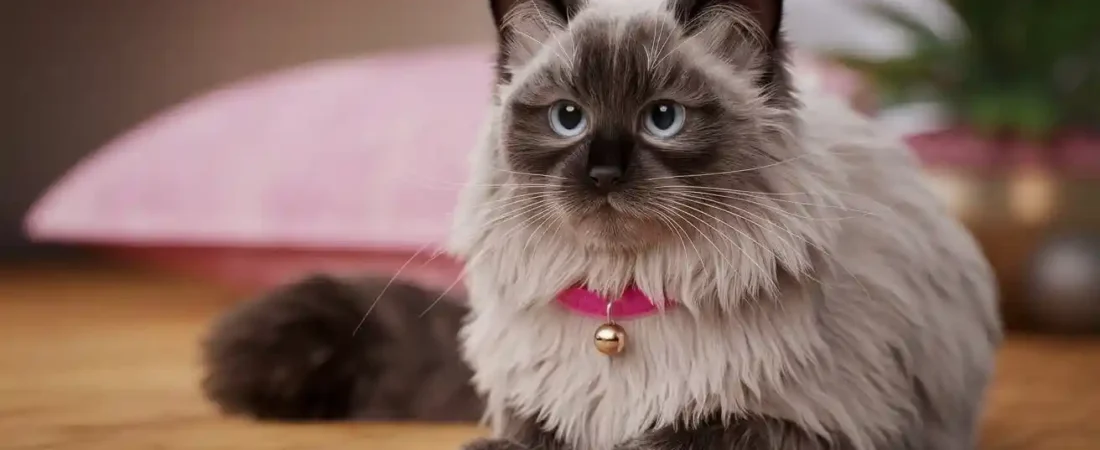
Can a Black Ragdoll Cat have a completely black coat? It depends on whether the name refers to a traditional pointed Ragdoll, a solid-color Cherubim from the Ragdoll Breed Group, or a cat with Ragdoll-like features. The traditional Ragdoll is a blue-eyed, pointed cat, with a lighter body and darker face, ears, legs and tail. A solid black coat does not fit that traditional pointed description.
There is an important registry distinction. The International Cat Association (TICA) lists Cherubim as a separate breed within the Ragdoll Breed Group and includes solid colors in its description, while TICA’s traditional Ragdoll profile describes pointed colors and patterns. The Cat Fanciers’ Association (CFA) also describes the traditional Ragdoll as a pointed, blue-eyed breed. See the TICA Ragdoll Breed Profile, TICA Cherubim Breed Profile and CFA Ragdoll Standard for the current descriptions.
This guide explains what people mean by a Black Ragdoll Cat, how to distinguish a dark seal point from a solid black coat, what registration papers can establish, and what to check before buying or adopting one. A listing that calls a kitten a Rare Black Ragdoll Cat should name its actual registry classification and show supporting pedigree records, not rely on a photo or a premium price.
Reviewed and updated on October 24, 2026.
What Does a Black Ragdoll Cat Look Like?
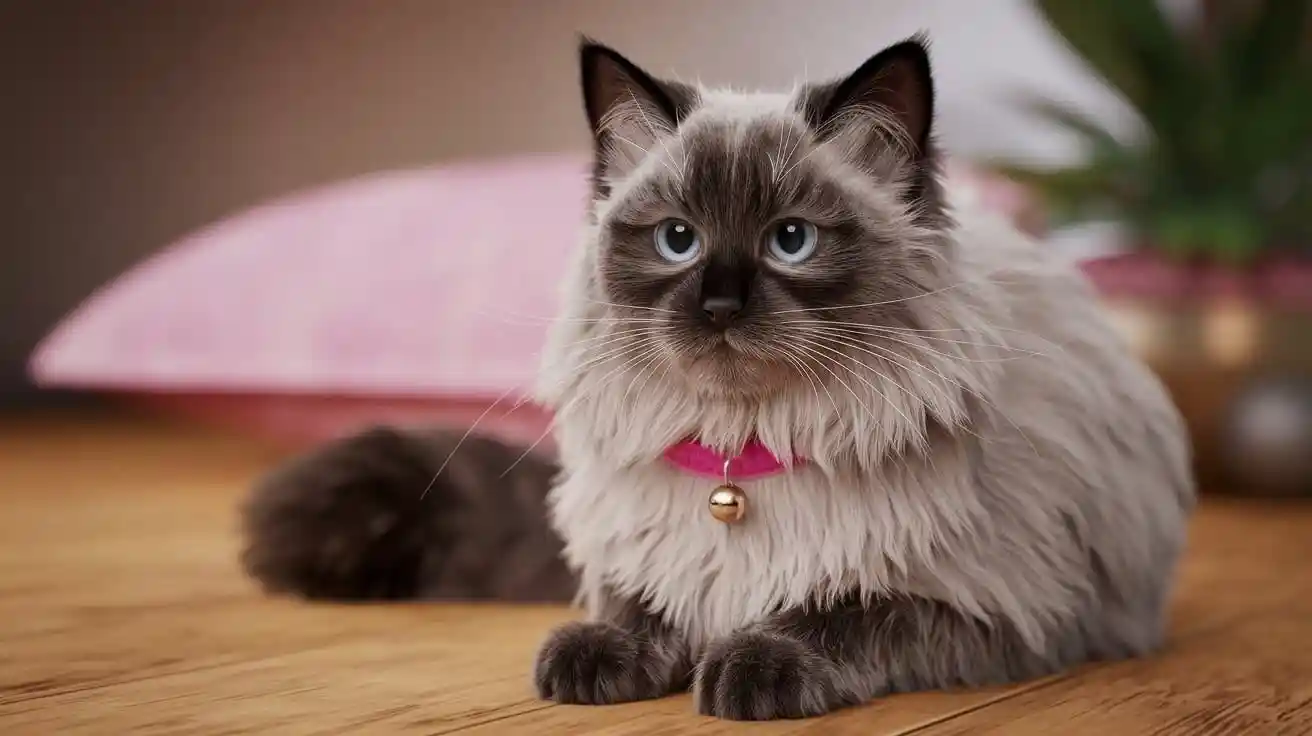
Photos advertised as a Black Ragdoll Cat can show different things: a very dark seal point Ragdoll, a solid black Cherubim, or a black cat with Ragdoll-like size and coat. When researching a Black Ragdoll Cat, confirm which classification applies rather than assessing rarity from a photograph. Look at the body and points, eye color, coat distribution and registration records together. Appearance alone cannot confirm a cat’s breed or pedigree. For a quick first check, compare the visible features with the registry designation rather than relying on the sales label.
| What You May Be Seeing | Typical Appearance | What to Verify |
|---|---|---|
| Traditional seal point Ragdoll | Very dark seal-brown points on the face, ears, legs and tail, with a lighter body and blue eyes | Pointed pattern and traditional Ragdoll pedigree |
| Solid-color Cherubim | Solid coat without the classic pale-body and dark-point contrast | TICA registration and the exact Cherubim designation |
| Black domestic longhair or possible mix | Solid black coat and potentially a fluffy coat or large build | Verified ancestry, if available. Appearance alone is not proof |
| Black-and-white tuxedo-looking cat | Black coat with white chest, paws, belly or facial markings | Breed documentation. Tuxedo is a coat description, not a pedigree |
Coat and Fur
Traditional Ragdolls have a moderately long, soft coat with a lighter body and darker points. A seal point can look almost black in dim indoor light, especially on the face, ears, legs and tail, but the body usually remains visibly lighter. A solid black cat has dark pigment across the body rather than the classic contrast between points and body. Coat photographs can be affected by lighting and editing, so compare several views in natural light.
Ragdolls are not maintenance-free. Comb the coat regularly, with attention to the chest, behind the ears, under the front legs and around the hindquarters where tangles can develop. Increase checks when shedding changes or if the cat’s coat becomes knotted.
Eye Color
Blue eyes are a defining feature of the traditional pointed Ragdoll standard. A solid black cat with green, gold or copper eyes does not match that traditional description, but eye color alone cannot identify its breed or prove that it is a Cherubim. Check the registration designation and pedigree paperwork, and confirm details directly with the registry named by the seller.
Size and Build
Traditional Ragdolls are medium to large cats with a substantial body, strong boning and a plumed tail. TICA gives typical adult weight ranges of about 10 to 15 pounds for females and 15 to 20 pounds for males, with slow maturity over several years. Individual cats vary, and body condition matters more than reaching a particular number on the scale.
Do not use size or a calm appearance as proof that a cat is a Ragdoll. Many domestic long-haired cats and other breeds can look similar. Choose based on temperament, health information, housing fit and your ability to provide lifelong care, then use registry records to verify a claimed pedigree.
Is a Solid Black Cat Recognized as a Traditional Ragdoll?
Under the traditional Ragdoll description used by major registries, the breed is pointed and blue-eyed. The point colors recognized in TICA’s traditional Ragdoll profile include seal, blue, chocolate, lilac, red, cream, cinnamon and fawn, along with tortie and lynx variations. A uniformly black coat is not part of that listed pointed palette. The CFA profile similarly describes a pointed, blue-eyed Ragdoll.
However, the answer needs more nuance than saying every solid black cat sold under a Ragdoll-related name must be a cross. TICA now lists Cherubim as a distinct breed within the Ragdoll Breed Group, with solid, mink and sepia color categories. A solid black cat with valid papers may therefore be registered as a Cherubim under TICA’s system rather than as a traditional pointed Ragdoll. Other black cats may be domestic longhairs, mixes or cats whose ancestry has not been documented.
To understand the distinction, start with the current TICA Ragdoll Profile and TICA Cherubim Profile. The CFA’s Ragdoll Breed Standard provides another recognized registry description. Registry rules are not identical, so a seller should identify the registration system and the actual designation on the papers.
Traditional Ragdoll Colors
Traditional Ragdoll colors include seal, blue, chocolate, lilac, red, cream and additional pointed variations depending on the registry standard. Their pattern is based on darker points against a lighter body, sometimes with white markings. For a useful visual comparison, see our Ragdoll Cat Colors and Patterns Guide and Chocolate Ragdoll Cat Guide.
Eye Color and Breed Identification
Eye color can be a clue when comparing a traditional pointed Ragdoll with a solid black cat, because blue eyes are part of the traditional Ragdoll description. But blue, green, gold or copper eyes do not establish pedigree on their own. Do not label a cat purebred or a cross based only on coat or eye color.
Dark Ragdoll Colors That Can Look Black
There is a difference between a dark-looking traditional Ragdoll and a solid black cat. A seal point may have very dark brown points and can appear nearly black in shade, but it should retain the pointed pattern and a lighter body. A solid black coat has a different distribution of pigment. Other labels, such as mink or sepia, describe different color categories and should be checked against the registry’s own terminology.
Are Black Ragdoll Cats Rare?
Are solid black cats sold as Ragdolls rare? Availability varies by region, breeder and registry, and the label alone does not prove rarity or pedigree. Some sellers use the phrase Rare Black Ragdoll Cat to market a solid-colored Cherubim or a cat with Ragdoll-like features. A higher asking price does not confirm registration, health, or quality.
Before buying, ask which registry the cat is registered with, whether the paperwork names Ragdoll or Cherubim, and whether the pedigree can be verified directly. If there are no registration documents, describe the animal by observable traits instead of assuming it is purebred. Adoption is also an option, and a mixed-breed cat can be a wonderful companion without a pedigree label.
For any kitten, ask for veterinary records, age-appropriate vaccinations and parasite care, health screening information for the parents, a written agreement and a clear plan for support after purchase. Avoid sellers who pressure you to pay quickly, will not show documentation or promise a completely disease-free animal.
Black Ragdoll Cat Personality: What to Expect
A Black Ragdoll Cat does not have a personality that can be predicted from coat color. Traditional Ragdolls are often described as social and relaxed, but individual cats can be outgoing, cautious, playful or independent. Socialization, early experiences, age, health and the home environment all affect behavior.
Temperament
Many traditional Ragdolls are people-oriented and may follow family members from room to room, relax nearby or seek attention. These are tendencies, not guarantees. When meeting a cat, watch how it approaches people, responds to ordinary sounds and handles new situations instead of relying on the breed label alone.
Socialization
Some Ragdolls live comfortably with children, cats or dogs when introductions are gradual and supervision is appropriate. Children should be taught not to chase, restrain or handle a cat roughly, and every cat should have a quiet place to retreat. Never assume a cat enjoys being grabbed or carried. Let it choose contact and stop handling when it signals discomfort.
Playfulness
Ragdolls need exercise and mental stimulation even if they are less vocal or less constantly active than some cats. Offer daily interactive play with wand toys, balls and food puzzles suited to the cat. Scratching posts, climbing shelves and secure window perches provide choices and help prevent boredom. Kittens and young adults may be especially playful, while older cats may need shorter sessions.
What Does a Black Ragdoll Label Usually Mean?
The phrase Black Ragdoll Cat is used loosely online. It may refer to a dark seal point traditional Ragdoll, a solid-colored Cherubim registered within TICA’s Ragdoll Breed Group, or a black long-haired cat with similar features but no verified Ragdoll-related pedigree. These are not interchangeable classifications. Ask for the registry’s official breed designation before deciding what a seller’s description means.
Black-and-White Cats and Ragdoll Bicolor Patterns
A black-and-white coat is not, by itself, proof of a traditional Ragdoll. The recognized Ragdoll bicolor pattern has a pointed base color with specific white markings, including the familiar inverted white V on the face. A cat with a black jacket and white chest or paws may instead be a tuxedo-patterned domestic cat, another breed, or a cat with a different documented classification.
Compare the entire coat, point pattern, eye color and pedigree rather than calling every black-and-white long-haired cat a bicolor Ragdoll. See TICA’s Ragdoll Breed Profile for an outline of the traditional colorpoint, mitted and bicolor patterns.
Tuxedo-Looking Longhaired Cats
“Tuxedo” is a descriptive nickname for a black-and-white coat pattern, not a guarantee of breed. A fluffy cat with a tuxedo pattern may be a domestic longhair or another cat with its own ancestry. If the cat is sold as a Ragdoll or Cherubim, request the registry certificate and check the exact classification independently.
Black Smoke Coats and Registry Labels
A black smoke coat generally describes dark outer hairs with lighter roots, but “black smoke Ragdoll” should not be treated as a standard traditional Ragdoll color without supporting registry documentation. Coat labels vary among breeds and registries. If a seller uses this phrase, ask which recognized breed classification appears on the papers and what the breeder means by “smoke.”
What to Check Before Buying or Adopting
Whether you are researching a Black Ragdoll Cat, a Cherubim or a dark-coated mixed-breed cat, focus on documentation, veterinary care and the conditions in which the kitten was raised. Good questions and records matter more than a rare-color claim.
- Ask which registry is being used and whether the cat is registered as a traditional Ragdoll, Cherubim or another breed.
- Request the registration certificate and pedigree, then verify details with the registry rather than accepting a screenshot or verbal claim.
- Ask for the kitten’s date of birth, veterinary exam records, vaccinations and parasite-control history.
- Ask what health screening has been done for the parents, including relevant HCM testing, and understand the limits of any genetic result.
- Observe the kitten’s environment and behavior, and ask how it has been socialized with people and everyday household experiences.
- Get the terms of sale or adoption, health guarantees if offered, return arrangements and ongoing breeder support in writing.
- Make a budget for food, litter, grooming supplies, routine vet care, emergency care and pet sitting.
Request recent photos and videos. Ask for multiple views of the actual cat, including the face, body, coat and eyes, but remember that pictures cannot prove breed or registration. If the cat is advertised as a black Ragdoll, ask for documents that identify its registry classification and parents.
Health and wellbeing. Ask for the kitten’s age, veterinary records, vaccination history, parasite treatment and details of any symptoms or ongoing needs. Ask which health screening has been performed on the parents and request actual results where available. For background, read our HCM in Ragdoll Cats Guide and the UC Davis Ragdoll HCM Test Information. A genetic test covers the specific variant tested and does not rule out every possible heart condition.
Research the breeder independently. Check whether the registry lists them as a member, look for a clear health and return policy, and seek references without relying only on testimonials published by the seller. Responsible rescues should also be able to explain what is known about the cat’s health and behavior. A registry listing alone does not replace your own checks.
Check the paperwork. Obtain a written contract or adoption agreement, veterinary documents, identification details and the registration certificate if the seller claims a registered pedigree. For a solid-color Cherubim listing, the actual designation on the registration documents is especially important. If the seller cannot substantiate the breed label, do not pay extra based on that claim alone.
Care and Health for a Solid Black Ragdoll-Related Cat
Care should be guided by the individual cat’s age, coat, body condition and health history, not by a color label. A solid-coated Cherubim and a traditional pointed Ragdoll may share a longhaired appearance and family background, but each cat’s medical needs still depend on its own circumstances. Arrange a veterinary exam after adoption or purchase and keep routine checkups, vaccinations and parasite prevention current according to your veterinarian’s advice.
Coat Care for Dark Longhaired Cats
Comb the coat on a regular schedule and check behind the ears, under the front legs, around the collar area and the hindquarters for tangles. Dark fur can make loose hair and small skin flakes harder to spot in some lighting, so inspect the skin as well as the surface of the coat. If you find a tight mat close to the skin, ask a veterinary professional or experienced groomer for help rather than cutting it with scissors.
Weight, Play and Indoor Enrichment
Large cats still need daily movement. Offer interactive play, sturdy scratching surfaces, climbable furniture and safe resting places. Measure food portions and use your veterinarian’s body-condition guidance to prevent excess weight. A healthy indoor environment also includes clean litter facilities, fresh water, safe windows and balconies, and enough room for the cat to move away when it wants quiet.
If you’re comparing coat colors, use our Ragdoll Cat Colors and Patterns Guide, Seal Point Ragdoll Cat Guide and Dark Gray Ragdoll Cat Guide. Those examples can help you compare pointed colors, but they cannot verify the ancestry of a particular animal.
How to Check a Seller’s Claims
Because the term is used inconsistently in advertisements, ask direct questions before paying a deposit. The aim is not to dismiss solid-color cats. It is to make sure you know what kind of cat is being offered, what the paperwork actually says and what support comes with the purchase.
Questions to Ask a Breeder or Rescue
- Which registry is named on the certificate, and what exact breed designation is recorded?
- Is the cat registered as a traditional Ragdoll, Cherubim or another classification?
- Can I review the pedigree and verify the registration details with the registry?
- What health screening has been done for the parents, and can I see the actual results?
- What veterinary care has the kitten received, and what records will I take home?
- How are kittens socialized, and can I see where they are raised?
- What written terms cover deposit payments, health concerns, returns and ongoing support?
What Should a Registration Certificate Show?
The certificate should identify the registering organization and the registered breed or category. Check the names and identifying details against the pedigree and ask the organization to confirm anything unclear. A social media profile, sales description, DNA ancestry estimate or photograph is not a replacement for a registry certificate. If a seller cannot document the claim, treat the cat’s exact ancestry as unverified rather than assuming a specific breed or cross.
Be cautious if the seller claims the cat is exceptionally rare but will not explain its registry status, asks for a premium solely because of the coat, or pressures you to pay immediately. A cat can be a wonderful companion without being a rare or show-eligible pedigree animal. What matters most is honest identification, appropriate care, sound socialization and a responsible match between cat and household.
FAQs (Because People Keep Asking)
Can Ragdoll Cats Be Black?
A uniformly black cat does not match the traditional pointed Ragdoll description used by CFA and in TICA’s Ragdoll profile. TICA does, however, recognize Cherubim as a distinct breed within the Ragdoll Breed Group, including solid-color cats. The correct answer depends on the registry designation and whether the animal has verified paperwork.
Are Black Ragdolls Rare?
Availability varies by region and registry. Solid-color cats from the Ragdoll Breed Group are a different classification from the traditional pointed Ragdoll, and black domestic longhairs or mixes may also be advertised using similar wording. A seller’s use of the word rare does not establish pedigree, quality or health.
Can a Black Ragdoll Have Green or Gold Eyes?
Green or gold eyes can occur in cats with solid coats, including some solid-color cats in the Cherubim category. Traditional pointed Ragdolls are described as blue-eyed. Eye color is a useful clue when comparing appearances, but it does not establish breed or registration on its own.
Is a Black Seal Point Ragdoll the Same as a Solid Black Cat?
No. Seal point Ragdolls have dark seal-brown points on the face, ears, legs and tail, with a lighter body. A solid black cat has dark pigment across the body rather than the traditional pointed contrast. Lighting can make seal points look almost black, which is why whole-body photos in natural light are helpful.
Is a Tuxedo Cat a Black-and-White Ragdoll?
Not necessarily. Tuxedo is a common description for black-and-white coat markings, not proof of breed. A traditional Ragdoll bicolor has its own pointed-color pattern and characteristic white markings. Verify ancestry with registry documents rather than relying on coat pattern alone.
How Can I Check Whether a Solid Cat Is a Registered Cherubim?
Ask to see the TICA registration documents and pedigree, then verify the details with TICA. Its Cherubim Breed Profile describes the category and its accepted color groups. Do not assume a cat is registered just because an advertisement uses the name.
How Much Does a Black Ragdoll-Related Cat Cost?
There is no dependable universal price. Cost varies with country, breeder, registration, pedigree, veterinary care and local availability. Ask for a written breakdown and compare the documentation and support offered. Be skeptical of a large premium justified only by the word rare.
Final Verdict: What to Know Before You Choose
The most important point is to separate a cat’s appearance from its official classification. A dark seal point Ragdoll, a solid-color Cherubim and a black longhaired cat without documented ancestry may look similar in a photograph, but they are not automatically the same. The current TICA profiles distinguish the traditional pointed Ragdoll from Cherubim, which includes solid colors, while CFA describes the traditional Ragdoll as pointed and blue-eyed.
If you are considering a Rare Black Ragdoll Cat, confirm the registry designation and pedigree before paying a premium. Review the veterinary records, ask about screening, observe the kitten’s environment and make sure you can provide grooming, enrichment and lifelong care. Do not rely on color or seller language alone to determine breed, temperament or health.
Editorial Note
This article distinguishes the traditional pointed Ragdoll from solid-color cats described in TICA’s Cherubim category. Registry policies can differ, and the name used by a seller does not prove a cat’s ancestry. This guide is for general information and does not replace a registry’s decision, pedigree verification or veterinary advice.
Trusted Sources
- The International Cat Association: Ragdoll Breed Profile, for traditional point colors, patterns and breed characteristics.
- The International Cat Association: Cherubim Breed Profile, for the separate solid, mink and sepia classification within the Ragdoll Breed Group.
- The Cat Fanciers’ Association: Ragdoll Breed Standard, for its pointed, blue-eyed traditional Ragdoll description.
- UC Davis Veterinary Genetics Laboratory: Ragdoll HCM Test, for the scope and limitations of the known HCM genetic test.
How This Guide Is Researched and Kept Current
This guide was reviewed and updated on October 24, 2026. We checked current breed descriptions published by TICA and CFA, compared their use of Ragdoll and Cherubim classifications, and reviewed veterinary genetics guidance for the health-screening advice. Registry requirements may change, so readers should verify the current rules and a specific cat’s registration details directly with the relevant organization before making a purchase decision.
About the Author
Abdul Khader is a Ragdoll enthusiast, researcher and writer who covers Ragdoll colors, patterns, behavior and everyday care. His work focuses on explaining breed information in practical language and helping readers ask better questions when researching a cat. He is not a veterinarian, and medical decisions should be discussed with a qualified veterinary professional.
Sources and Further Reading
The following registry, genetics and veterinary resources support the breed, care and health information discussed in this guide. Check the original source for current guidance, and consult a veterinarian about the needs of an individual cat.
- TICA Ragdoll Breed Profile
- TICA Cherubim Breed Profile
- CFA Ragdoll Standard
- UC Davis Ragdoll HCM Test Information
What We Have Covered
This guide brings together the main points to consider when researching Black Ragdoll Cat: Breed Standards, Colors & Care Guide. It covers:
- What Does a Black Ragdoll Cat Look Like?
- Is a Solid Black Cat Recognized as a Traditional Ragdoll?
- Are Black Ragdoll Cats Rare?
- Black Ragdoll Cat Personality: What to Expect
- What Does a Black Ragdoll Label Usually Mean?
- What to Check Before Buying or Adopting
- Care and Health for a Solid Black Ragdoll-Related Cat
- How to Check a Seller’s Claims
Use the breed and care information as a starting point, then check relevant records and seek advice from a qualified veterinarian or the appropriate breed registry when making decisions about an individual cat.