
A Ragdoll-Himalayan cross may appeal to people who want a gentle, people-friendly companion. A cat from this pairing may show the relaxed, affectionate tendencies often associated with Ragdolls and the calm, soft-spoken qualities commonly described in Himalayans. Those are tendencies, not guarantees.
Appearance alone cannot tell you what an individual cat will be like. When assessing the Ragdoll Himalayan Mix Personality, pay attention to confidence, playfulness, tolerance for handling and interest in social contact. Two kittens from the same litter can differ in all of these areas. Spend time with the kitten, ask about early socialisation, and treat parent-breed traits as clues rather than a personality guarantee.
A Ragdoll may contribute an easygoing, sociable temperament, while a Himalayan may contribute a gentle and quieter style of interaction. The Himalayan is placed in the Persian Breed Group by The International Cat Association (TICA), and its history involves breeding Persian-type cats with Siamese colourpoint features. A mixed kitten can inherit a different combination of physical and behavioural traits, so there is no single temperament profile that fits every Ragdoll-Himalayan cross.
Written by Abdul Khader, researcher and writer at Ragdoll Car World. Last updated: November 2, 2026
What Can You Expect From a Ragdoll Himalayan Mix Personality?
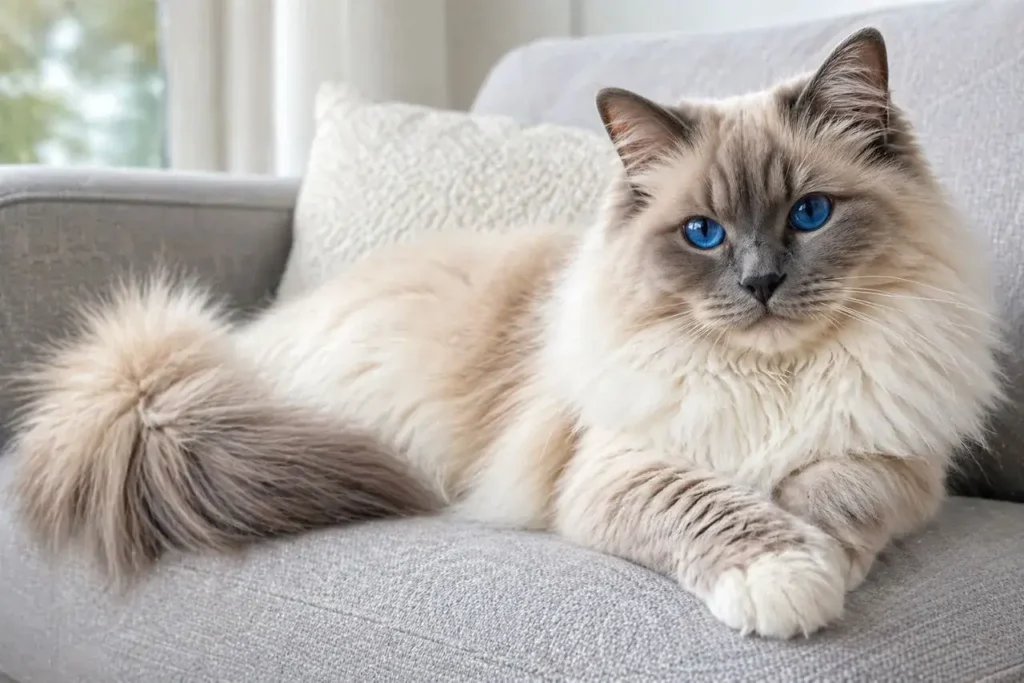
TICA describes Ragdolls as affectionate, relaxed and generally tolerant of children and other pets. Its Himalayan profile describes a gentle, quiet cat that often enjoys calm family time and short bursts of play. These descriptions help explain the traits a mixed cat might show, but they are breed tendencies rather than a reliable prediction of an individual kitten’s behaviour.
This guide separates documented parent-breed characteristics from points that cannot be predicted in a cross. The Ragdoll Himalayan Mix Personality is an individual outcome, not a fixed formula based on two breed names. It also uses veterinary and feline-welfare resources to explain which health questions, socialisation details and everyday care routines are worth discussing before adoption.
You’ll find a practical look at affection, activity, vocalisation, handling, family life, grooming, health screening and the first month at home. The article was reviewed and updated on November 2, 2026.
What Is a Ragdoll Himalayan Mix? Understanding the Hybrid
Before discussing behaviour, it helps to understand what the parent breeds are known for. A Ragdoll-Himalayan cross is a mixed-breed cat, not a separate standardised breed with its own established temperament standard. TICA publishes breed profiles and standards for Ragdolls and Himalayans, but those descriptions do not create a fixed standard for their cross. A seller should therefore describe the kitten honestly as a mix and provide the available parentage and health records.
The Ragdoll Parent: Loyal, Floppy, and Dog-Like
The Ragdoll was developed in California in the 1960s. TICA describes it as a large, affectionate, semi-longhaired cat with a relaxed disposition. Adult females commonly weigh around 10 to 15 pounds and males around 15 to 20 pounds, although individual cats vary. Many Ragdolls enjoy following people and relaxing close to family members. The familiar relaxed “flop” is a behaviour some show when comfortable, not something every Ragdoll does or something an owner should try to force.
Ragdoll Cat personality traits include:
- Often affectionate and interested in being near familiar people
- Many are relaxed and tolerant when their boundaries are respected
- Can do well with children and other pets when introductions and handling are appropriate
- Some follow family members from room to room or greet them at the door
- Usually enjoy play, even when their overall activity level is moderate
Ragdolls are often relatively quiet, although some individuals are more vocal than others. They generally benefit from regular interaction and play. Avoid assuming that a Ragdoll-Himalayan mix cannot cope with ordinary workday absences; instead, assess the individual cat’s history, provide enrichment and watch for signs of distress when left alone.
The Himalayan Parent: Calm, Curious, and Quietly Social
TICA places the Himalayan in the Persian Breed Group. The breed was developed to combine a Persian-type body and coat with Siamese-derived colourpoint features and blue eyes. TICA describes Himalayans as gentle, quiet and affectionate, with a preference for relaxed family time as well as short bursts of play. Those are useful clues when considering a mix, but individual cats can be more outgoing, reserved or active.
Himalayan cat personality traits include:
- Often gentle and affectionate with familiar people
- May prefer resting near family rather than seeking constant handling
- Often communicate with soft meows, but vocalisation varies
- Can enjoy quiet resting periods as well as interactive play
- Need regular coat care, especially if they inherit a dense undercoat
Some Himalayans have short, flat facial structures, and TICA specifically advises owners to discuss screening for polycystic kidney disease (PKD), respiratory problems, eye conditions and hypertrophic cardiomyopathy with breeders and veterinarians. A mixed kitten may or may not inherit a shortened muzzle or other structural traits. Do not assume a cross will have a less extreme face. Assess the kitten’s breathing, eyes, bite and overall comfort, and ask for the parent cats’ health records. The health section below explains which questions to raise.
What the Mix Actually Looks Like in Practice
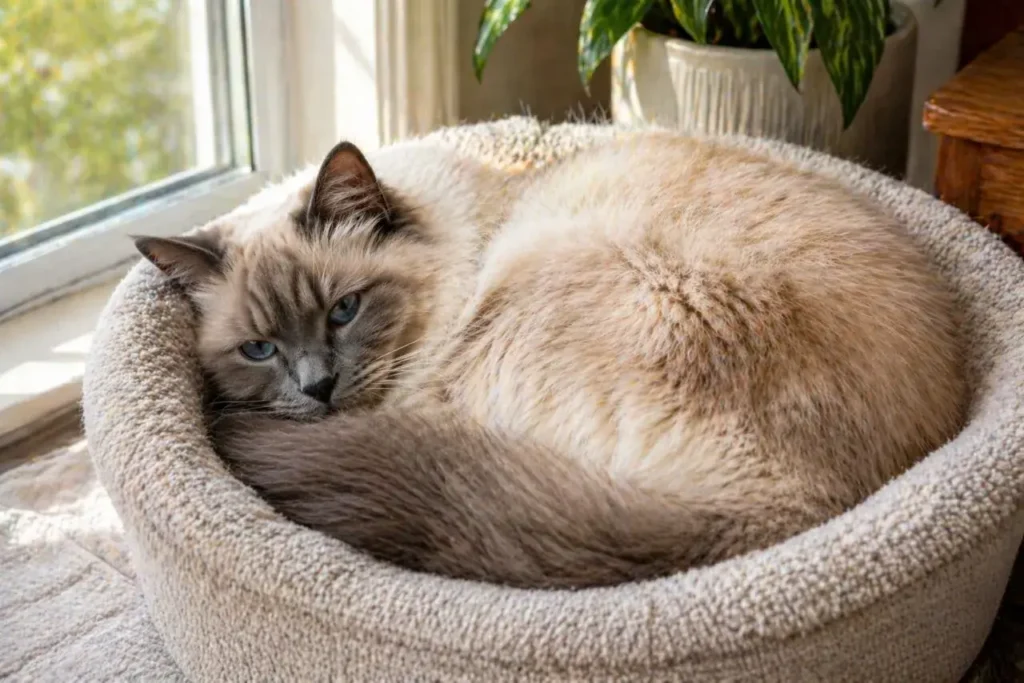
A Ragdoll-Himalayan cross may have a long or semi-long coat, a colourpoint pattern and blue eyes, but the exact appearance depends on the parents and the kitten’s inherited genes. Coat density can also vary, which matters because a dense undercoat is more likely to tangle. For a closer look at Ragdoll colour and pattern terminology, see our Ragdoll Cat Colors and Patterns Guide and Pure White Ragdoll Cat Guide. You can also compare other pairings in our Persian Ragdoll Cat Mix Guide and Ragdoll Norwegian Forest Cat Mix Guide.
Some will be outgoing and cuddly; others may be quieter and prefer sitting beside you. Look at the kitten’s behaviour, how it responds to gentle interaction, and how it behaves after a new sound or person enters the room. That gives you more useful information than the mix label alone.
The Full Ragdoll Himalayan Mix Personality Breakdown

This section turns the parent-breed tendencies into practical expectations. It is a guide to possibilities, not a promise that every kitten will behave the same way.
Affectionate and People-Oriented, but Not Always a Lap Cat
A Ragdoll-Himalayan mix may enjoy staying in the same room as familiar people, resting nearby or asking for attention with a quiet meow. Some cats actively seek laps and cuddles; others prefer a place beside the sofa or at the end of the bed. Neither preference means the cat is less affectionate. Allow the cat to choose the kind of contact it enjoys.
Following a person from room to room, greeting them at the door or settling nearby are behaviours some cats develop. Do not use these as requirements for the mix. Early socialisation, past experiences, age and individual temperament all influence how much contact a cat seeks.
Key affection traits:
- Follows owners around the house regularly
- Initiates contact through gentle nudging or sitting near you
- Prefers to be in the same room rather than isolated
- Bonds closely with one or two primary people while still being friendly to others
Calm Energy With Playful Moments
Both parent breeds are often described as relaxed, but that does not mean a kitten will be inactive. Young cats may race, climb, chase toys and explore for short bursts. As they mature, their preferred activity level may settle, but daily opportunities to play and move remain important.
Offer a mix of interactive play, food puzzles, scratching surfaces and safe places to climb or rest. A feather wand or a toy that moves like prey can encourage chasing and pouncing. Keep sessions short enough to hold the cat’s interest, and finish with a chance to catch the toy. Avoid shining laser pointers into the eyes, and provide a physical toy the cat can catch at the end.
This mix may suit a household that enjoys a balance of quiet companionship and regular play. Meet the individual cat before deciding whether its energy level fits your routine.
Quiet Vocalization
Ragdolls are often described as relatively quiet, and TICA describes the Himalayan’s voice as soft and harmonious. A mixed cat may use quiet meows, chirps or louder calls. Vocalisation is individual, and a sudden change in how often a cat cries can also signal pain, stress or another health issue.
Notice the context as well as the sound. A cat may vocalise around meals, when greeting you or when asking for a closed door to be opened. Persistent or newly developed vocalisation deserves attention, especially when it comes with appetite, litter-box or activity changes.
Intelligence and Routine Awareness
These cats are smart. They pick up on your schedule quickly. They know what time you usually feed them, when you normally wake up, and what the sound of your keys in the door means.
Many cats appreciate predictable feeding, play and rest opportunities, but TICA notes that Himalayans can be adaptable and do not necessarily mind changes in routine. A particular cat may still find noise, visitors or a house move unsettling. Keep a familiar hiding place available and introduce larger changes gradually, while watching the cat’s response rather than assuming it will react in a fixed way.
Strong Bonding Behavior
Both parent breeds are commonly described as affectionate, but how much company an individual cat wants can vary. A cat that spends part of the day alone may still do well when it has a secure resting area, clean litter, fresh water, enrichment and meaningful interaction before and after work. Watch for persistent hiding, over-grooming, appetite changes or distress when you leave, and discuss ongoing concerns with a veterinarian.
Some cats enjoy frequent company; others are comfortable with ordinary periods alone when their needs are met. If you are away for work, build a routine that includes play and interaction before or after you leave, and provide safe resting places, scratching surfaces and food enrichment. A second cat is not automatically the right answer, because compatibility and the existing cat’s preferences matter.
How Does the Ragdoll Himalayan Mix Personality Change With Age?
The Ragdoll Himalayan Mix Personality may look different as a kitten becomes an adult. Kittens are often more curious and energetic, while adult cats may settle into a more predictable rhythm. Older cats can also become less tolerant of handling or vigorous play if they develop joint pain, dental disease or another health problem. Age alone does not determine temperament, so watch for changes in the individual cat.
Kitten Stage
Young kittens need frequent play, safe exploration and positive, gentle handling. Give them opportunities to learn about everyday sounds and people without overwhelming them.
Adult Stage
As the cat matures, adjust play and enrichment to its interests and physical condition. Keep familiar routines where they help, but offer new toys and activities gradually.
Senior Stage
Older cats may prefer shorter play sessions, warmer resting areas and easier access to food, water and litter. A noticeable change in sociability, activity or tolerance for touch should prompt a veterinary check rather than being written off as normal ageing.
How to Read Your Cat’s Personality and Body Language
Breed descriptions cannot replace observing the cat in front of you. Look for patterns over time rather than judging a single moment. A relaxed cat may rest with a loose body, half-closed eyes, neutral ears and a tail that is not whipping. A cat that wants space may turn its head away, flatten its ears, crouch, tense its body, swish its tail or move out of reach.
Signs Your Cat Is Comfortable
- Approaches voluntarily and can move away whenever it wants
- Rests in open areas, stretches out or settles near familiar people
- Shows interest in play, food puzzles or exploring its space
- Accepts gentle contact without freezing, struggling or repeatedly turning away
Signs Your Cat Needs More Space
- Hides for long periods, crouches or stays tense
- Flattens its ears, lashes its tail, growls or hisses
- Stops eating, avoids the litter tray or grooms excessively
- Resists handling or repeatedly tries to move away
Do not punish a cat for hissing, hiding or avoiding contact. Give it a safe retreat and reduce the pressure. Persistent behaviour changes, appetite changes or litter-box problems need a veterinary check because pain and illness can affect behaviour.
Pros and Cons of the Ragdoll Himalayan Mix Personality
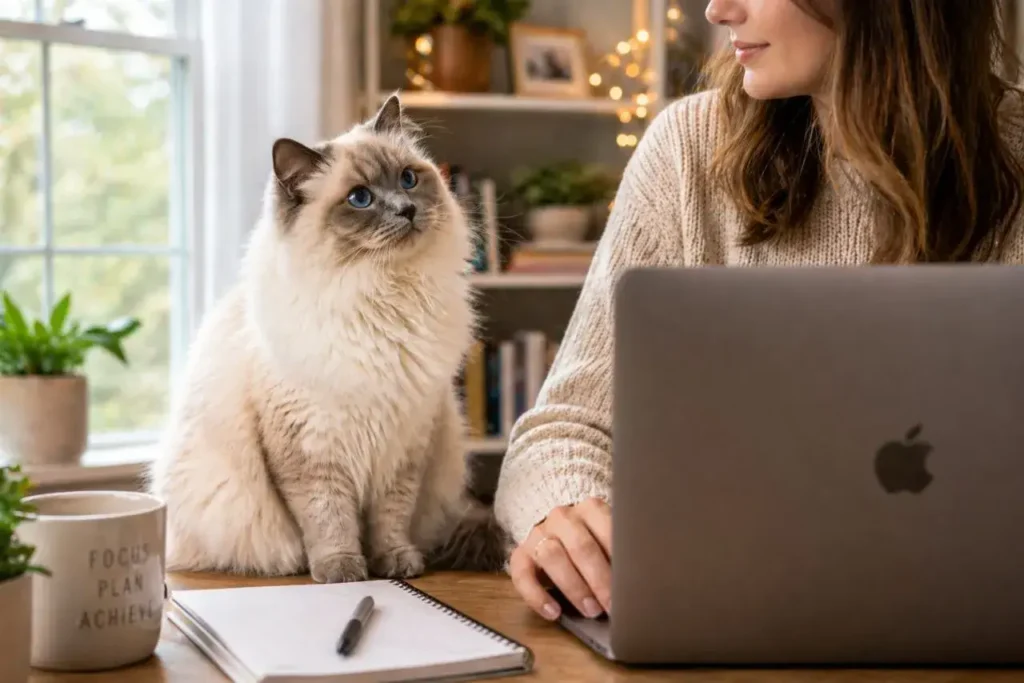
| Potential advantages | Possible challenges |
|---|---|
| May be affectionate and enjoy spending time near family | Personality and handling preferences vary between cats |
| May have a relaxed home temperament | Long or dense coats can need frequent grooming |
| Can become a good family companion with positive socialisation | Children must be taught to handle cats gently |
| May live comfortably with suitable pets after gradual introductions | Not every cat wants to share its home with another animal |
| Interactive play can support exercise and bonding | Some inherited facial traits may require extra health attention |
| Can suit a range of home types | Breeder records and individual health checks matter |
How the Ragdoll Himalayan Mix Does With Kids and Other Pets
Some may be friendly with children and other animals, but the outcome depends on the individual cat, early experiences, the other household members and how introductions are managed. Calm behaviour should never be treated as permission for rough handling.
With Children
A kitten that has had positive experiences with people may settle well in a family home, but neither parentage nor breed label guarantees patience. Teach children to let the cat approach, avoid pulling its tail or fur, leave it alone while eating or sleeping, and never carry it without adult supervision. A cat must always have a quiet place where children cannot follow.
Very young children, toddlers in particular, should always be supervised around any cat. Even the most patient cat has limits. Teach children not to pull tails, disturb sleeping cats, or carry them awkwardly. With those basics in place, this mix tends to do well in family settings.
With Other Cats
Some individuals enjoy feline company, while others prefer to be the only cat. Start a new introduction with separate spaces, separate food and water stations, and scent exchange. Move to brief visual contact and supervised meetings only when both cats remain relaxed. There is no fixed number of days; let their behaviour set the pace.
With Dogs
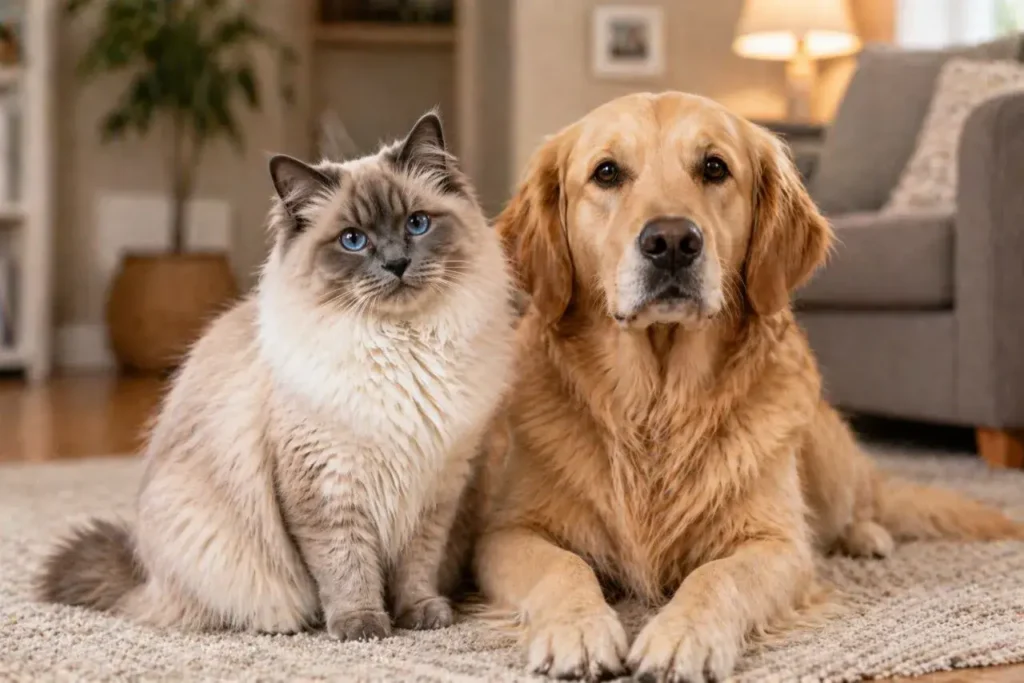
A cat-friendly dog with reliable responses to cues may be a suitable housemate, but introductions should be controlled. Keep the dog on a lead at first, provide the cat with high escape routes and a dog-free room, and do not allow chasing. If either animal becomes tense, separate them and slow the process.
Health Checks Worth Discussing for a Ragdoll-Himalayan Cross
Understanding the Ragdoll Himalayan mix personality means understanding the environment that keeps them thriving. These cats are not especially demanding, but they do have specific needs.
Grooming Is a Non-Negotiable
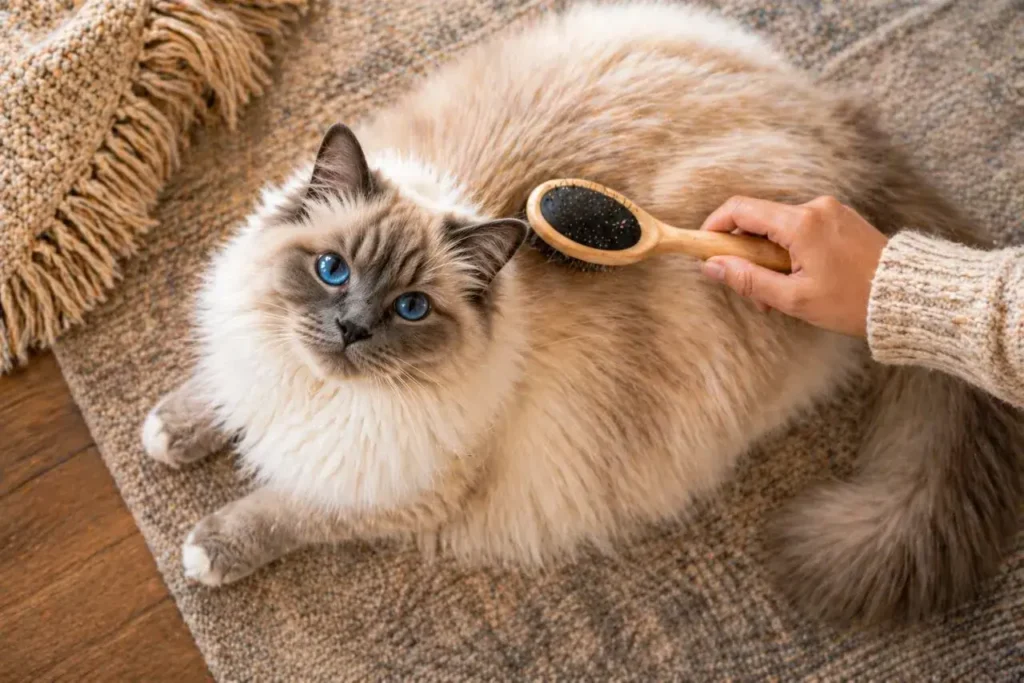
Coat care depends on the coat your cat inherits. A Ragdoll-type coat may need regular weekly combing, while a dense Himalayan-type undercoat can require daily attention. Start with a thorough comb-through at least several times a week, check down to the skin, and increase the frequency if you find tangles. Mats close to the skin should be handled by a veterinary professional or experienced groomer rather than cut out with scissors at home.
Grooming Tips for the Ragdoll Himalayan mix:
- Use a wide-tooth comb first to work through any tangles
- Follow with a slicker brush to smooth and fluff the coat
- Pay extra attention to the armpits, belly, and behind the ears, where mats tend to form
- Start grooming early in kittenhood so they get used to it
- Keep sessions short and positive, especially at first
Many owners find that grooming becomes a bonding moment. These cats tend to enjoy the attention once they are comfortable with the routine.
Mental and Physical Stimulation
Calm does not mean unstimulated. A bored Himalayan Ragdoll cat can become withdrawn or develop repetitive behaviors over time. Daily play sessions of 10 to 15 minutes keep them mentally active and physically healthy.
Best enrichment for Ragdoll Himalayan mixes:
- Feather wands for interactive chasing
- Puzzle feeders that require problem-solving
- Window perches to watch birds and outdoor activity
- Soft plush toys for independent play
- Cat trees for climbing and elevated resting spots
Hydration and Nutrition
Fresh water should always be available. Some cats prefer a fountain, while others drink readily from a clean bowl, so offer the option your cat uses comfortably. One inherited condition worth discussing with the breeder is polycystic kidney disease (PKD), which is associated with Persian ancestry and is also reported in Himalayans. Cornell explains that PKD is inherited and that genetic testing can identify cats carrying the known disease-associated variant. Ask whether the Himalayan parent was tested and request the result rather than assuming that extra water alone prevents the condition. Read Cornell’s Polycystic Kidney Disease Guide.
Feed a complete and balanced diet appropriate for the cat’s life stage, body condition and health. Do not use the parents’ breed or expected adult size to guess portion sizes. Ask your veterinarian to assess body condition and recommend a feeding amount, then review it as the cat grows or its activity changes.
Consistent Companionship
Set aside time for play, gentle interaction and grooming, but also respect the cat’s choice to rest alone. Some cats seek frequent company; others are comfortable spending more time independently. The aim is to provide predictable opportunities for contact and enrichment, not to force a fixed amount of cuddling or handling.
If your household is often busy or chaotic, this mix can adapt to some degree. But a calm, predictable environment is where they genuinely thrive.
How to Choose a Ragdoll Himalayan Mix Kitten Responsibly
What to Check Before Choosing a Kitten
Spend time observing the kitten rather than choosing on appearance alone. Notice whether it approaches people voluntarily, shows interest in play or exploration, and can settle again after an ordinary household sound or brief interruption. A shy kitten may need time to warm up, so treat one meeting as a snapshot rather than a definitive temperament test. Never force handling to see whether a kitten is tolerant.
- Ask to see the kitten’s veterinary record, including examinations, vaccinations and parasite-control history.
- Ask about the kitten’s age, current food, litter habits, socialisation and the routine it is used to.
- Request available parentage information and health records. For the Ragdoll line, ask whether the parents were tested for the Ragdoll-associated HCM variant. For the Himalayan or Persian line, ask what PKD screening has been performed.
- Ask whether either parent has a history of breathing, eye, dental or other health problems, and discuss any concerns with your veterinarian.
- Choose a breeder or rescue that answers questions clearly, provides records where available and does not pressure you to take a kitten before you are ready.
A Practical First-Month Settling-In Plan
A calm arrival helps any newly adopted cat learn its surroundings. Use this flexible first-month plan as a starting point, then adjust it to the cat’s confidence and behaviour. Some cats need more time at each stage.
- Days 1-3: Set up one quiet “home base” room with food, water, litter, and a hiding spot. Let your cat come to you rather than chasing them around the house. Keep visitors to a minimum.
- Days 4-7: Let the cat approach you. Offer treats, quiet play and brief petting only if it welcomes contact. Introduce another room when it is eating, using the litter tray and resting comfortably in its home base. Do not force holding or brushing.
- Week 2: Establish a flexible feeding and play routine. Many cats learn familiar household patterns over time, but their response to change varies. Keep the schedule predictable without expecting this cross to adapt at a fixed pace.
- Week 3: If you have other pets, begin scent-swapping and short supervised introductions. Watch body language closely and separate again if either animal seems stressed.
- Week 4: Schedule a wellness vet visit if you haven’t already, covering a general check, weight, teeth, and a conversation about spay/neuter timing and diet. This is also a good time to establish your grooming routine as a habit rather than an afterthought.
Move at the cat’s pace. Hiding for a short period can be a normal response to a new environment, but a cat that does not eat, appears unwell, has breathing difficulty or cannot use the litter tray needs prompt veterinary advice. Do not assume every change is simply settling-in stress.
Ragdoll Himalayan Mix vs. Purebred: Is the Hybrid Different?
People sometimes ask whether a Ragdoll Himalayan hybrid behaves differently from a purebred Ragdoll or a purebred Himalayan. Honestly, it depends on which parent’s genetics dominate in that individual cat.
Some mixes lean heavier Ragdoll, meaning they’re larger, floppier, and even more dog-like in their loyalty. Others lean more Himalayan, meaning they’re a bit more reserved and routine-dependent. Most land somewhere in the middle.
There is no reliable rule that a cross will avoid the traits associated with either parent. A kitten may inherit a more outgoing nature, a quieter temperament, a denser coat or a different facial structure. The best guide is the kitten’s own behaviour, health, parent history and response to its home environment.
Ragdoll vs. Himalayan vs. Mix: Quick Comparison
| Trait | Ragdoll | Himalayan | Possible Mix Variation |
|---|---|---|---|
| Typical temperament description | Affectionate, relaxed | Gentle, quiet | May be sociable, gentle or more reserved |
| Activity | Calm, but enjoys play | Placid with playful bursts | May range from laid-back to quite playful |
| Vocalisation | Often relatively quiet | Often soft-voiced | Can be quiet or more vocal |
| Coat care | Regular combing | Frequent, often daily grooming | Depends on coat length and undercoat density |
| With children | Often tolerant | Often gentle | Depends on socialisation and respectful handling |
| With other pets | Can be tolerant | Often adaptable | Depends on each animal and introduction process |
| Alone time | Benefits from interaction | Individual preference varies | Assess the cat rather than assuming a fixed limit |
| Routine changes | May adapt well | TICA describes the breed as adaptable | Provide a safe retreat and observe the response |
Does a Ragdoll Himalayan Mix Suit Apartment Living?
This mix may suit someone looking for a companion with a potentially gentle, sociable temperament and who is prepared for regular coat care. The right fit depends on the individual cat’s health, confidence, activity level and comfort with handling.
You are a great match if:
- You can provide daily interaction, play and enrichment, even when you work outside the home
- You would enjoy a cat that may be affectionate and prefer staying near familiar people
- Children in the household can follow gentle handling rules and give the cat space
- You are willing to commit to regular grooming sessions
- You want a quiet cat that fits a relaxed lifestyle
- You can manage gradual introductions and keep separate resources for resident pets
You might want to reconsider if:
- You cannot provide basic care, interaction or enrichment during the day
- You are not prepared for ongoing coat maintenance
- You want a highly independent cat that entertains itself
- You cannot provide a safe resting area where the cat can retreat from noise or activity
FAQs (Because People Keep Asking): Ragdoll Himalayan Mix Personality
What is the personality of a Ragdoll Himalayan mix?
The Ragdoll Himalayan mix personality may include the affectionate, relaxed tendencies often associated with Ragdolls and the gentle, quieter traits often described in Himalayans. But a cross can lean toward either parent or show a different combination. Assess the individual cat’s confidence, playfulness, sociability and handling preferences instead of expecting one fixed temperament.
Are Ragdoll Himalayan mix cats good with kids?
It can be a good match, but there is no guarantee that every Ragdoll-Himalayan cross will be patient with children. Look for an individual cat that is comfortable around household activity, and teach children to let the cat approach, avoid chasing or lifting it without support, and leave it alone when it retreats. Always supervise young children and provide the cat with a quiet, child-free place to rest.
Do Ragdoll Himalayan mix cats like to be held?
Some enjoy being held, while others prefer being petted with all four paws on a surface. Ragdolls are often associated with relaxing when carried, but that is not universal and should never be assumed in a cross. Support the cat’s body, keep handling brief and stop if it stiffens, struggles or tries to leave.
Are Ragdoll Himalayan mix cats high maintenance?
Coat care can be demanding, especially if the cat inherits a thick Himalayan-type undercoat. Start with several careful combing sessions each week and increase to daily grooming if tangles develop. The cat also needs daily play, clean resources and regular veterinary care. The exact workload depends on its coat and personality.
How long do Ragdoll Himalayan mix cats live?
There is no well-established lifespan figure specifically for Ragdoll-Himalayan crosses. The lifespan of an individual cat depends on inherited health, preventive care, weight, environment and access to veterinary treatment. Use the parent-breed profiles as background only, and ask your veterinarian to discuss the health history of the particular cat you are considering. Our Ragdoll Cat Lifespan Guide explains the parent breed’s general lifespan information.
Do Ragdoll Himalayan mix cats get along with dogs?
It depends on the dog. A calm, cat-friendly dog that does not chase or crowd the cat can live peacefully with a Himalayan Ragdoll mix. High-energy dogs that are rough or unpredictable will stress this cat out. Slow, careful introductions always give the best outcome.
Are Ragdoll Himalayan mixes vocal cats?
Vocalisation varies. Some cats use soft meows or chirps, while others are more talkative or rarely vocalise. A sudden change in vocal behaviour, especially with appetite, litter-box or activity changes, is worth discussing with a veterinarian.
How often should I groom a Ragdoll Himalayan mix?
Start with several careful combing sessions each week and check the coat down to the skin. A dense undercoat may need daily attention, while a silkier coat may need less. Focus on areas behind the ears, under the arms, around the collar and across the belly, where tangles often form. Build the routine gradually and stop before the cat becomes distressed.
Is the Ragdoll Himalayan Mix Personality Suitable for First-Time Cat Owners?
The Ragdoll Himalayan Mix Personality may suit a first-time owner who can provide regular grooming, preventive veterinary care, daily play and patient socialisation. The important thing is to understand the individual cat’s needs and be prepared for long-coat maintenance and possible inherited health concerns. A calm appearance does not mean the cat needs no training or enrichment.
Are Ragdoll Himalayan Mix Cats Hypoallergenic?
No. Neither parent breed is considered reliably hypoallergenic, and a cross cannot be promised to cause fewer allergy symptoms. Cat allergies are commonly triggered by proteins found in saliva and skin secretions, which can spread onto the coat. Anyone with cat allergies should spend time around the individual cat and discuss their symptoms with a healthcare professional before adopting.
Do Ragdoll Himalayan Mix Cats Shed a Lot?
Shedding varies with coat type, season, health and the individual cat. A long or dense coat can leave visible hair around the home and needs regular combing to prevent tangles. Grooming removes loose hair from the coat, but it does not stop normal shedding.
Can a Ragdoll Himalayan Mix Live in an Apartment?
Yes, many cats can live comfortably in apartments when they have safe windows, vertical space, scratching posts, hiding places, clean litter facilities and daily play. Their personality and activity needs matter more than the size of the home alone.
What Health Problems Should I Ask About?
Ask about PKD screening in the Himalayan line and the Ragdoll-associated HCM genetic variant in the Ragdoll line. Also ask a veterinarian to assess breathing, eyes, teeth, weight and general health. These are questions to investigate, not conditions that every mixed cat will develop.
Is the Ragdoll Himalayan Cross a Recognised Breed?
No separate breed standard is established for this cross in the TICA profiles. It should be described as a mixed-breed cat with Ragdoll and Himalayan parentage, where that parentage can be documented. The Ragdoll Himalayan Mix Personality should therefore be assessed from the kitten’s actual behaviour rather than an assumed breed standard.
Final Thoughts on the Ragdoll Himalayan Mix Personality
The Ragdoll Himalayan mix personality can combine traits that many people appreciate: affection, a relaxed approach to family life and an interest in gentle play. But there is no guaranteed blend. Some cats will be outgoing and cuddly, while others will be quieter or more independent. The best match is the individual cat whose temperament, health and daily needs fit your household.
Good care means more than choosing the right food and brushing the coat. It includes appropriate health screening, preventive veterinary care, clean resources, daily opportunities for play, and respect for the cat’s boundaries. The grooming schedule should match the coat the cat actually has.
If you are considering adoption, ask for parent health records, meet the kitten when possible and pay attention to how it responds to people and its surroundings. A responsible breeder or rescue should welcome practical questions. Give yourself time to choose a cat whose needs and personality fit the life you can provide.
If you already live with a Ragdoll-Himalayan cross, your observations are valuable because mixed cats do not all behave alike. Sharing specific details about age, activity, grooming needs and social preferences can help other readers understand the range of personalities they may encounter.
Sources and Further Reading
This guide uses breed-registry profiles, veterinary health references and feline-welfare guidance. These resources help distinguish recognised parent-breed characteristics from assumptions about a mixed-breed cat. For deeper reading:
- TICA Ragdoll Breed Profile
- TICA Himalayan Breed Profile
- Cornell Polycystic Kidney Disease Guide
- UC Davis Veterinary Genetics Laboratory: Ragdoll HCM Test
- AAFP and ISFM Feline Environmental Needs Guidelines
Reviewed and updated November 2, 2026. This article provides general educational information and does not replace an examination or advice from a licensed veterinarian. Health risks vary between individuals, and any concerns about breathing, eyes, appetite, mobility or behaviour should be assessed by a veterinary professional.
How This Guide Is Researched and Kept Current
For this update, parent-breed descriptions were checked against TICA’s published profiles. Health information was cross-checked with Cornell University College of Veterinary Medicine and the UC Davis Veterinary Genetics Laboratory. Behaviour and home-environment recommendations were checked against feline environmental guidance. Claims about the mixed cat are qualified where there is no established cross-specific standard or reliable evidence that every kitten inherits the same traits. This article was reviewed and updated on November 2, 2026, and should be revisited when relevant registry or veterinary guidance changes.
What We Have Covered
This Ragdoll Himalayan Mix Personality guide explains what you may and may not be able to predict about the cross. It covers:
- How Ragdoll and Himalayan parent-breed tendencies may influence personality, without guaranteeing a particular temperament.
- Affection, play, vocalisation, handling preferences and signs that a cat is comfortable or needs space.
- How the mix may fit with children, other pets, apartment living and different household routines.
- Coat maintenance, enrichment, nutrition, hydration and settling into a new home.
- Health questions to discuss, including PKD, the Ragdoll-associated HCM variant, breathing, eye and dental checks.
- Questions to ask a breeder or rescue, records to request and a practical first-month settling-in checklist.
The key point: meet the individual cat, check its health history and choose a companion whose needs fit the care and time you can provide.
Sources and Further Reading
The following registry, genetics and veterinary resources support the parent-breed, health and care information discussed in this guide. Check the original sources for current guidance, and consult a veterinarian about the needs of an individual cat.
- Cornell’s Polycystic Kidney Disease Guide
- TICA Ragdoll Breed Profile
- TICA Himalayan Breed Profile
- UC Davis Veterinary Genetics Laboratory: Ragdoll HCM Test
- AAFP and ISFM Feline Environmental Needs Guidelines
What We Have Covered
This guide explains what to expect from a Ragdoll Himalayan mix and which traits cannot be predicted with certainty. It covers:
- What Can You Expect From a Ragdoll Himalayan Mix Personality?
- What Is a Ragdoll Himalayan Mix? Understanding the Hybrid
- The Full Ragdoll Himalayan Mix Personality Breakdown
- How Does the Ragdoll Himalayan Mix Personality Change With Age?
- How to Read Your Cat’s Personality and Body Language
- Pros and Cons of the Ragdoll Himalayan Mix Personality
- How the Ragdoll Himalayan Mix Does With Kids and Other Pets
- Health Checks Worth Discussing for a Ragdoll-Himalayan Cross
Meet the individual cat, review its health history and ask a veterinarian or responsible breeder about the care needs that apply to that cat.